


Best Joint Replacement Surgeon in Nagpur

DR. PRATIK GANDHI
MBBS, MS (Orthopaedics)
Fellowship in Joint Replacement (Hyderabad)
Consultant Orthopaedic & Joint Replacement Surgeon
- He is a Consultant Orthopaedic Surgeon and Joint Replacement Surgeon with an experience of over a decade.
- He has completed his Post Graduation from Mysore (Karnataka) Rajiv Gandhi University of health sciences, University, Bangalore.
- Fellowship in Trauma Surgery under Dr. R. M. Chandak, Nagpur which is one of the best Orthopaedic centres in central India.
- Fellowship in Joint Replacement under Dr. H. J. Sangtani, Nagpur and Dr. Gurava Reddy, Kims Sunshine Hospitals, Secunderabad, which is one of the best Joint Replacement facilities in India. Here he has performed and assisted several Joint Replacement and Revision Surgeries.
Best Orthopaedic Treatment in Nagpur
JOINT REPLACEMENT
ORTHOPAEDIC INJURY
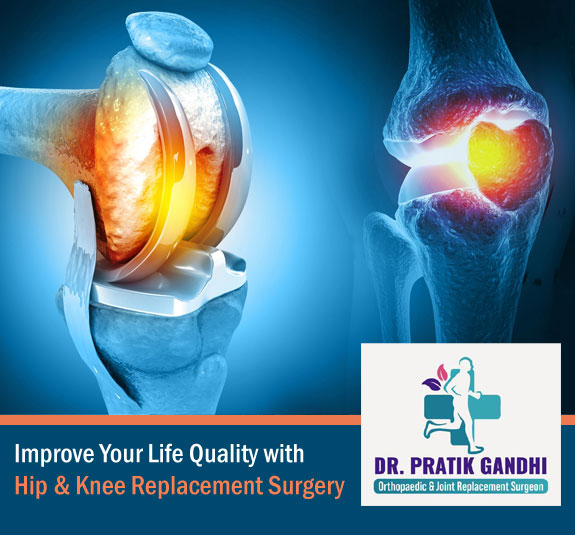
Frequently Asked Questions
Orthopaedics / Joint Replacement / Sports Orthopaedic
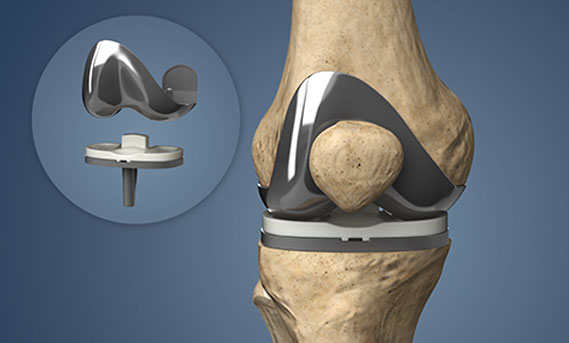
What is Knee Replacement Surgery
Knee replacement, also known as knee arthroplasty, is a surgical procedure to replace damaged parts of the knee joint with artificial components. It’s commonly performed to relieve severe knee pain and improve mobility in individuals with conditions such as osteoarthritis, rheumatoid arthritis, or severe knee injuries.
More About Knee Replacement
Types of Hip Replacement
Total Hip Replacement (THR): In THR, both the ball (femoral head) and socket (acetabulum) of the hip joint are replaced with artificial components, typically made of metal, ceramic, or plastic.
Partial Hip Replacement: Also known as hemiarthroplasty, this procedure involves replacing only the femoral head while preserving the patient’s natural acetabulum. It’s often chosen for patients with fractures of the femoral head or certain types of hip arthritis.
More About Hip Replacement
Types of Dislocation of Bones
Shoulder Dislocation (Glenohumeral Dislocation): Dislocation of the upper arm bone (humerus) from the shoulder socket (glenoid).
Elbow Dislocation: Dislocation of the bones in the elbow joint, including the humerus, radius, and ulna.
Hip Dislocation: Dislocation of the femoral head from the acetabulum of the pelvis.
Knee Dislocation: Dislocation of the bones in the knee joint, including the femur, tibia, and patella.
Ankle Dislocation: Dislocation of the bones in the ankle joint, typically involving the talus and tibia or fibula.
Finger and Toe Dislocation: Dislocation of the bones in the fingers or toes, often due to trauma or hyperextension.
More About Dislocation of Bones
Symptoms of Frozen shoulder
Pain: Persistent pain in the shoulder joint, often worsened by movement or pressure on the shoulder.
Stiffness: Gradual onset of shoulder stiffness, making it difficult to move the arm in various directions.
Limited Range of Motion : Difficulty in performing activities that involve overhead motion or reaching behind the back.
Progressive Worsening : Symptoms tend to worsen over time, with periods of severe pain and stiffness.
More About Frozen shoulder
Latest News / Blog / Events

Why Joint Replacement Has Become More Common: Trends & Advances
Why Joint Replacement Has Become More Common: Trends & Advances In recent years, Joint Replacement procedures have witnessed a remarkable rise…
Joint Replacement for Arthritis: When Medications Stop Working
Joint Replacement for Arthritis: When Medications Stop Working Arthritis is one of the leading causes of Severe Joint Pain, disability, and…
Shoulder Replacement Surgery: Who Needs It and Why
Shoulder Replacement Surgery: Who Needs It and Why Shoulder Replacement Surgery has become an increasingly preferred solution for patients suffering from…
Orthopaedic Informative Booklets



Contact Us
Gandhi Orthopaedic Centre
Gandhi Nursing Home
Address : Shripad Complex, First & Second Floor, Near Darodkar Square, Central Avenue, Nagpur – 440032
Phone : 7498503279 / (0712) 2767575 / 7020344298
Email : drpratikgandhi@yahoo.co.in
Intima Heart & Superspeciality Hospital
Address : Intima Heart & Superspeciality Hospital – 269, Central Bazar Road, near , Kachipura Square, New Ramdaspeth, Ramdaspeth, Nagpur, Maharashtra 440010
Phone : 9607735350 / 7498503279
Email : drpratikgandhi@yahoo.co.in
Quick Links
- Best Joint Replacement Surgeon in Nagpur
- Best Orthopedist in Nagpur
- Best Knee Arthroscopy in Nagpur
- Hip replacement Surgery in Nagpur
- Revision Hip Replacement Surgeries
- Total Hip Replacement in Nagpur
- Hip Joint Injury Treatment in Nagpur
- Shoulder Injury Treatment in Nagpur
- Knee Replacement in Nagpur
- Knee Joint Injury Treatment in Nagpur
- Frozen Shoulder Treatment in Nagpur
- Femur Fracture Treatment in Nagpur
- Trochanteric Bursitis Treatment in Nagpur
- Tendon Tears Treatment in Nagpur
- Tendinitis in Shoulder Treatment in Nagpur
- Best Knee Replacement Surgeon In Nagpur
- Best Orthopedic Doctor in Nagpur
- Best Treatment for Joint Pain in Nagpur
- Best Treatment for Hip Pain in Nagpur
- Best Treatment for Knee Pain in Nagpur
- Best Treatment for Shoulder Pain in Nagpur
- Best Shoulder Arthroscopy in Nagpur
- Sprains in Shoulder Treatment in Nagpur
- Hip Flexor Strain Treatment in Nagpur
- Cruciate Ligament Injuries Treatment in Nagpur
- Hip Dislocation Treatment in Nagpur
- Hip Fractures Treatment in Nagpur
- Hip Joint Stress Fracture Treatment in Nagpur
- Hip Labral Tear Treatment in Nagpur
- Femoroacetabular Impingement (FAI) Treatment in Nagpur
- Shoulder Dislocation Treatment in Nagpur
- Shoulder Bone Fractures Treatment in Nagpur
- Shoulder Impingement Treatment in Nagpur
- Rotator Cuff Injury Treatment in Nagpur
- Meniscal Tears Treatment in Nagpur
- Knee Fractures Treatment in Nagpur
- Knee Dislocations Treatment in Nagpur
- Arm Fracture Treatment in Nagpur
- Leg Fracture Treatment in Nagpur
- Joints Fracture Treatment in Nagpur
- Ankle Fracture Treatment in Nagpur
- Joints Dislocation Treatment in Nagpur
- Multiple Broken Bones Treatment in Nagpur
Joint Replacement FAQ – Answered by Dr. Pratik Gandhi
Meet Dr. Pratik Gandhi – Best Joint Replacement Surgeon
Dr. Pratik Gandhi is a highly experienced and trusted orthopedic and joint replacement surgeon, known for his patient-centric approach, precision surgical techniques, and advanced treatment methods. With a strong track record of successful hip and knee replacements, Dr. Gandhi helps patients reclaim mobility and lead pain-free, active lives.
What Is Joint Replacement Surgery?
Joint replacement surgery involves removing a damaged or diseased joint and replacing it with an artificial implant, known as a prosthesis. This procedure is most commonly performed on the knee, hip, or shoulder, and aims to:
- Relieve pain
- Restore mobility
- Improve quality of life
When Is Joint Replacement Needed?
Joint replacement is usually recommended when:
- Pain is severe and persistent
- Movement is significantly limited
- Non-surgical treatments have failed
- Conditions like osteoarthritis, rheumatoid arthritis, or injury have damaged the joint
Quick Facts About Joint Replacement
- Joint replacement is a safe and common procedure, especially for knees and hips.
- Over 1 million joint replacements are performed annually worldwide.
- Most patients return to normal activities within 6–12 weeks post-surgery.
- Implants can last 15–25 years with proper care and activity moderation.
- Robotic-assisted and minimally invasive techniques now allow faster recovery.
Which joints can be replaced?
Most commonly replaced joints include:
- Knees
- Hips
- Shoulders
Will I feel pain during or after the surgery?
Surgery is performed under general or spinal anesthesia, so you won’t feel pain during the operation. Postoperative pain is well-managed using medications and fades significantly in the first few weeks.
How long is the hospital stay?
Most patients stay for 2–4 days. In some minimally invasive or robotic-assisted cases, patients may be discharged within 1–2 days.
How soon can I walk after surgery?
In most cases, patients begin walking with support within 24–48 hours. Physical therapy starts immediately to promote mobility and strength.
What is the recovery timeline?
- Week 1–2: Pain control, early mobilization, light walking with support.
- Week 3–6: Improved strength and flexibility, increased mobility.
- After 6–12 weeks: Return to daily activities, driving, and light work.
- Full recovery may take 3–6 months, depending on age, health, and compliance with rehab.
Will I need physical therapy?
Yes, physiotherapy is essential after joint replacement to:
- Regain strength and flexibility
- Prevent stiffness
- Improve the long-term success of the implant